
Ventilation and Access
Access restrictions for people living with SMA using ventilatory support
Why this data matters
Access to disease-modifying therapies has transformed outcomes for many people living with spinal muscular atrophy (SMA). But for those who use ventilatory support, this progress is not always guaranteed. Across some countries in Europe, ventilation status is being used — explicitly or implicitly — as a gatekeeping criterion: to decide who can start treatment, who can continue it, and who gets reimbursed. In practice, this means people with the greatest clinical need are often the ones facing the greatest barriers to treatment. This is not a marginal administrative detail — it is a fundamental equity issue, and one that has received far too little attention.
Making it harder still is a lack of transparency: the rules themselves are frequently unclear or simply invisible. People living with SMA and their families often cannot find out what they are actually entitled to, or whether moving, traveling, or seeking treatment elsewhere could change their situation. It is often not even clear whether a restriction applies only to invasive ventilation, or also to non-invasive support — nor how "permanent" ventilation is defined, if such a threshold is used at all. This lack of transparency is itself a barrier to treatment, on top of the restrictions themselves.
For an overview over the different regulations in the single countries when it comes to access to medicines for people living with SMA using ventilatory support and further information, please click on the button below:

Why this table was developed
This table was developed to expose a problem that has long stayed hidden in fragmented, hard-to-find national policies: that people using ventilatory support are treated differently from other people living with SMA when it comes to accessing treatment. By systematically mapping where and how ventilation-related criteria are applied — across countries, therapies, and health systems — we make visible what has, until now, been unclear even to those directly affected. The goal is not simply comparison for its own sake, but to give patients, clinicians, and advocates the evidence needed to challenge restrictions that are not based on clinical need alone, and to demand clarity where none currently exists.
How this table can be used
The table is intended as a practical resource and advocacy tool for multiple stakeholders.
- Patient organisations and advocates can use it to demonstrate that ventilation-based exclusion is a real and widespread pattern, to push for clarity and change at a national level, and to hold policy-makers accountable to clinical rather than administrative criteria.
- Clinicians and researchers can better understand how non-clinical criteria may be shaping treatment decisions and outcomes for their patients.
- Policy-makers and payers can use it to scrutinise whether their own criteria are transparent, clinically justified, and fairly applied - and where they need to be clarified or reformed.
- Families and individuals can use it to better understand what access conditions may exist, and to ask more informed questions of their own healthcare systems.
Key conclusion
The central finding is not simply that countries differ — it is that people living with SMA who use ventilatory support face systematically reduced access to treatment compared to those who do not, and that these restrictions are often applied without clear, published, or consistent criteria. The clinical or scientific rationale underlying such restrictions is not always transparent. Some countries assess access individually, based on clinical judgement. Others apply hard thresholds — most often expressed in hours of ventilatory support per day — that can exclude people from starting or continuing treatment regardless of their broader clinical picture. In many cases, it remains unclear whether restrictions apply to invasive ventilation only, or also to non-invasive support, and how or whether “permanent” ventilation is even defined.
The result: two people with a similar clinical profile may have entirely different access to treatment — not because of medical need, but because of where they live and how their ventilation is classified under rules they may never have been told about. This is the inequity this table is designed to make visible, and to help change.
Links to other materials we have as SMA Europe on this topic:
Do you need materials to illustrate how it is to live with ventilation?
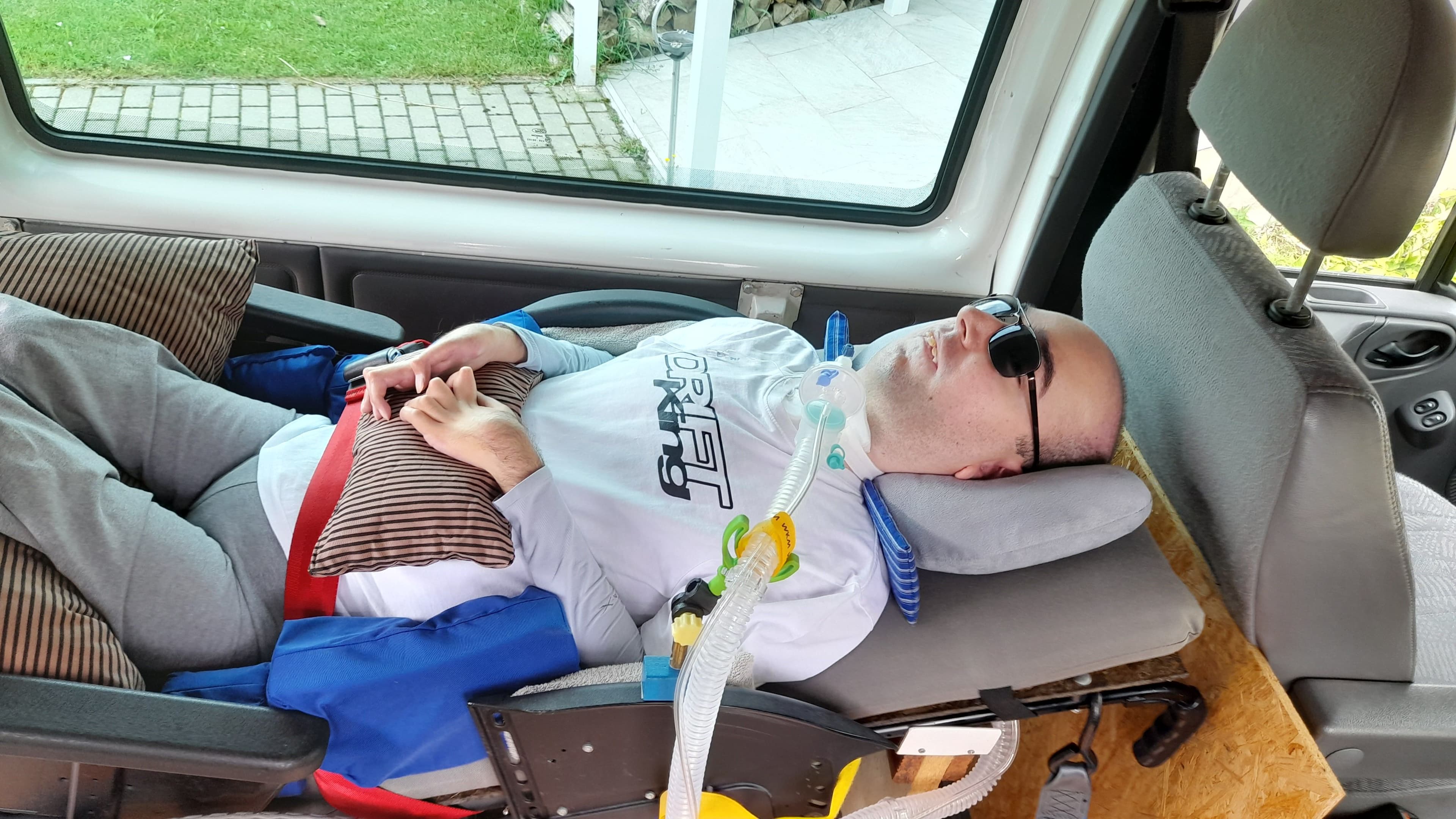
- Regarding access to medicines in the context of ventilation, you may wish to explore the real-life story of Gábor.
- Meet Elise from the SMA Europe Youth Group.
Do you need additional data about treatment and ventilation?
Please consult the following SMA Europe scientific publications:
- Erbaş Y, Servais L, Shieh PB, Goedeker NL, Waldrop MA, Bo R, Raju D, Benguerba K, Reyna SP, Wolff D, Finkel RS. Trach and treat: Safety and motor outcomes following onasemnogene abeparvovec in patients with spinal muscular atrophy and tracheostomies in the RESTORE registry. J Neuromuscul Dis. 2025 Nov 11:22143602251395173. doi: 10.1177/22143602251395173. Epub 2025 Nov 11. PMID: 41217888; PMCID: PMC13434910.
- Erbaş Y, Finkel RS. Ad astra per aspera: treatment challenges and opportunities for children with spinal muscular atrophy and tracheostomy. Gene Ther. 2026 Jan;33(1):84-86. doi: 10.1038/s41434-025-00581-2. Epub 2025 Nov 25. PMID: 41291051.
-
Erbaş Y, Germanenko O, Larotonda A, Verhulst S, Mayer H, Finkel R, Gusset N. Evolving phenotypes and ventilation needs in SMA in the post-treatment era: Results from a European community survey Poster presented during the 5th International Scientific Congress on Spinal Muscular Atrophy in Budapest 2026.

Further evidence and lived experience
The evidence and experiences shared in these materials above show that people with SMA who use ventilatory support can benefit from disease-modifying treatments. Real-life experiences, clinical data and scientific publications demonstrate that treatment can support motor function and other meaningful outcomes, including in people with tracheostomies or significant ventilation needs.
Real-life stories: Hear directly from people living with SMA about their experiences with ventilation and access to treatment, including Gábor’s story and Elise’s perspective from the SMA Europe Youth Group.
Scientific evidence: Research on people with SMA using tracheostomies provides evidence that treatment can be safe and beneficial, challenging the assumption that ventilatory support should, in itself, be a reason to exclude someone from treatment.
Stay updated!
Newsletter sign up
Keep up-to-date with the OdySMA project. Sign up to receive our digital newsletter
OdySMA is a participatory advocacy tool. Therefore SMA Europe cannot warrant the completeness, reliability, or absolute accuracy of the data shared on OdySMA, as there may be changes that our members and supporters do not immediately inform us of. Should you identify inaccuracies or omissions, please contact us and let us know. We count on you!